Memento Mori
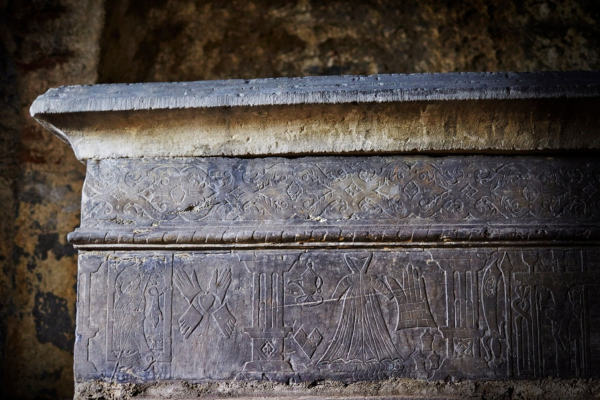
The skeleton in the coffin serves as a "Memento Mori" means remember death, or remember you will die in Latin. These kinds of inscriptions became popular in the Renaissance, and reached their peak during the Victorian era.
We have three different variations of these skeletal memento mori on tombs throughout the church and graveyard, can you find them all?
St Patrick and the Snakes
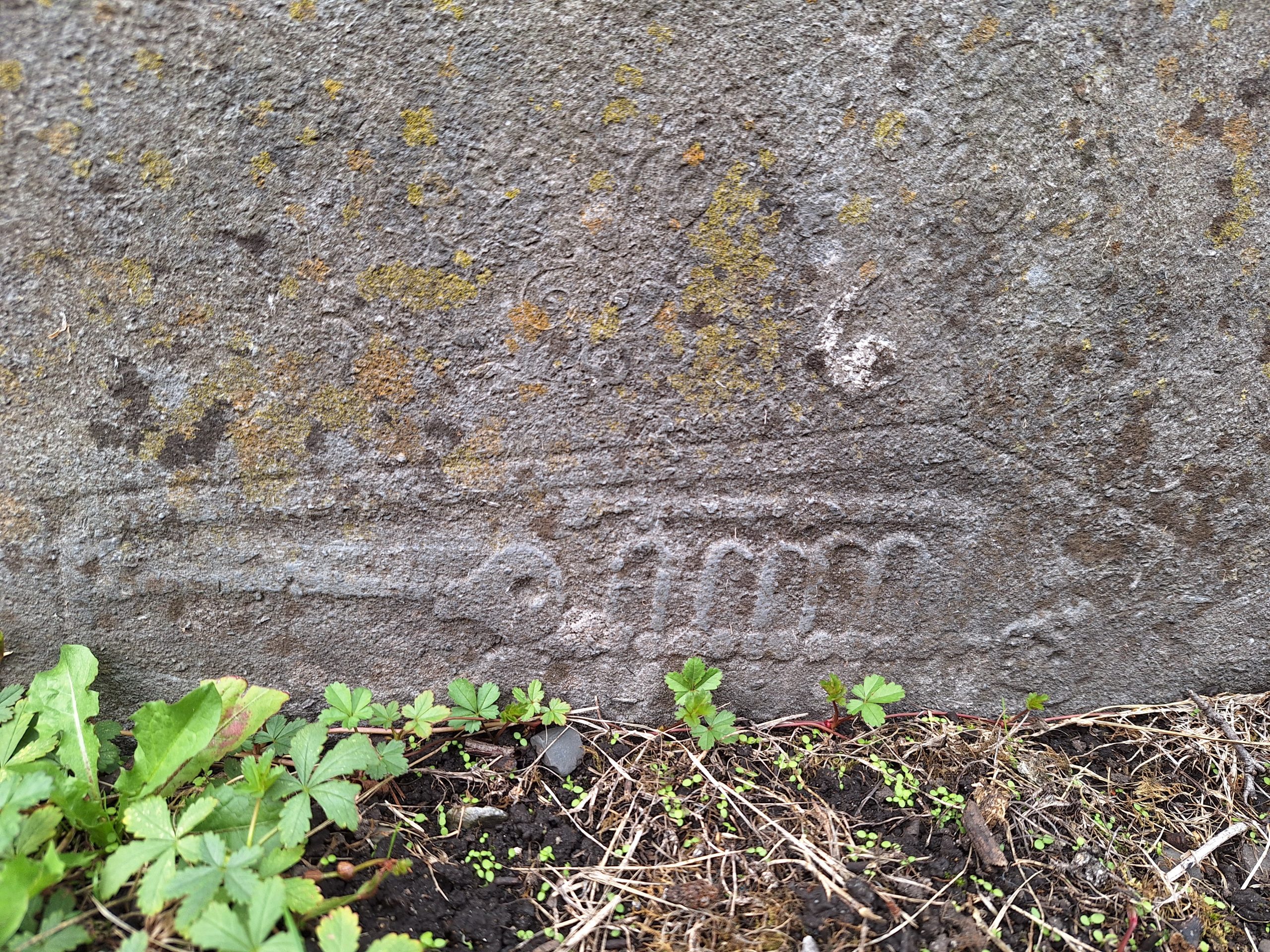
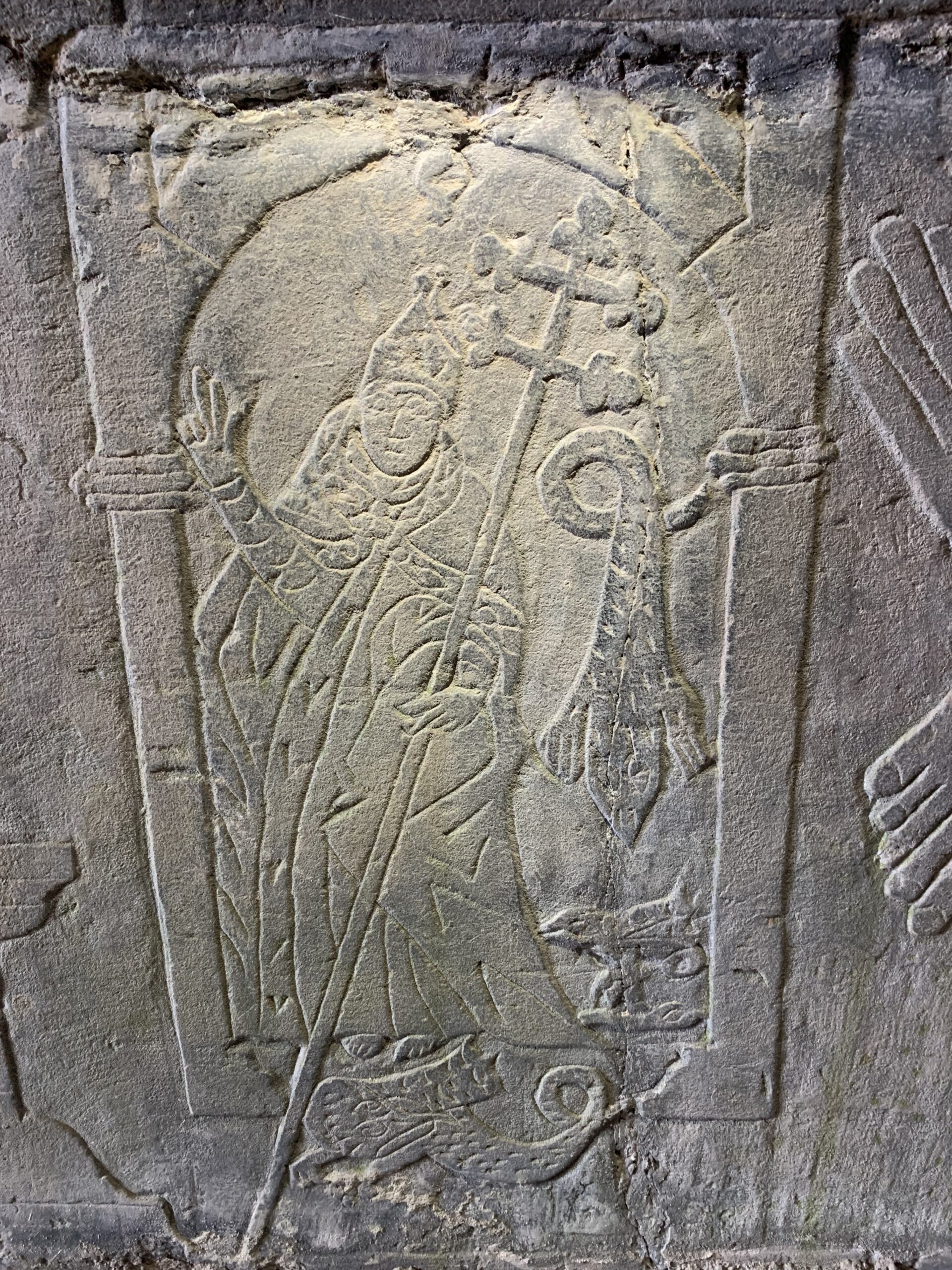
This image of St Patrick turning the snakes out of Ireland is interesting for many different reasons. The carving is done by the Walter Kerin school, a famous Kilkenny stonemason. It is a rare piece that is signed by the artist in stone.
Looking at the figure of St Patrick and the snakes there is incredible detail, but one thing in particular really catches the eye. These snakes were carved by someone who had only ever heard of them, never actually seen one in real life. Because of that, the stonemason must have assumed that they had legs as he has included them in the carving!
Throughout medieval art, you can see little instances of where an artist has confidently said they knew how to depict an animal they have never seen before, and taken little liberties with it. The most famous example of this is of course, the unicorn. Several theories exist as to what might have been a unicorn, from a reindeer to a rhinoceros, but what really sold the story were narwhal horns that were traded throughout Europe, giving us our classic unicorn horn look today.
The Stonemason's Trick
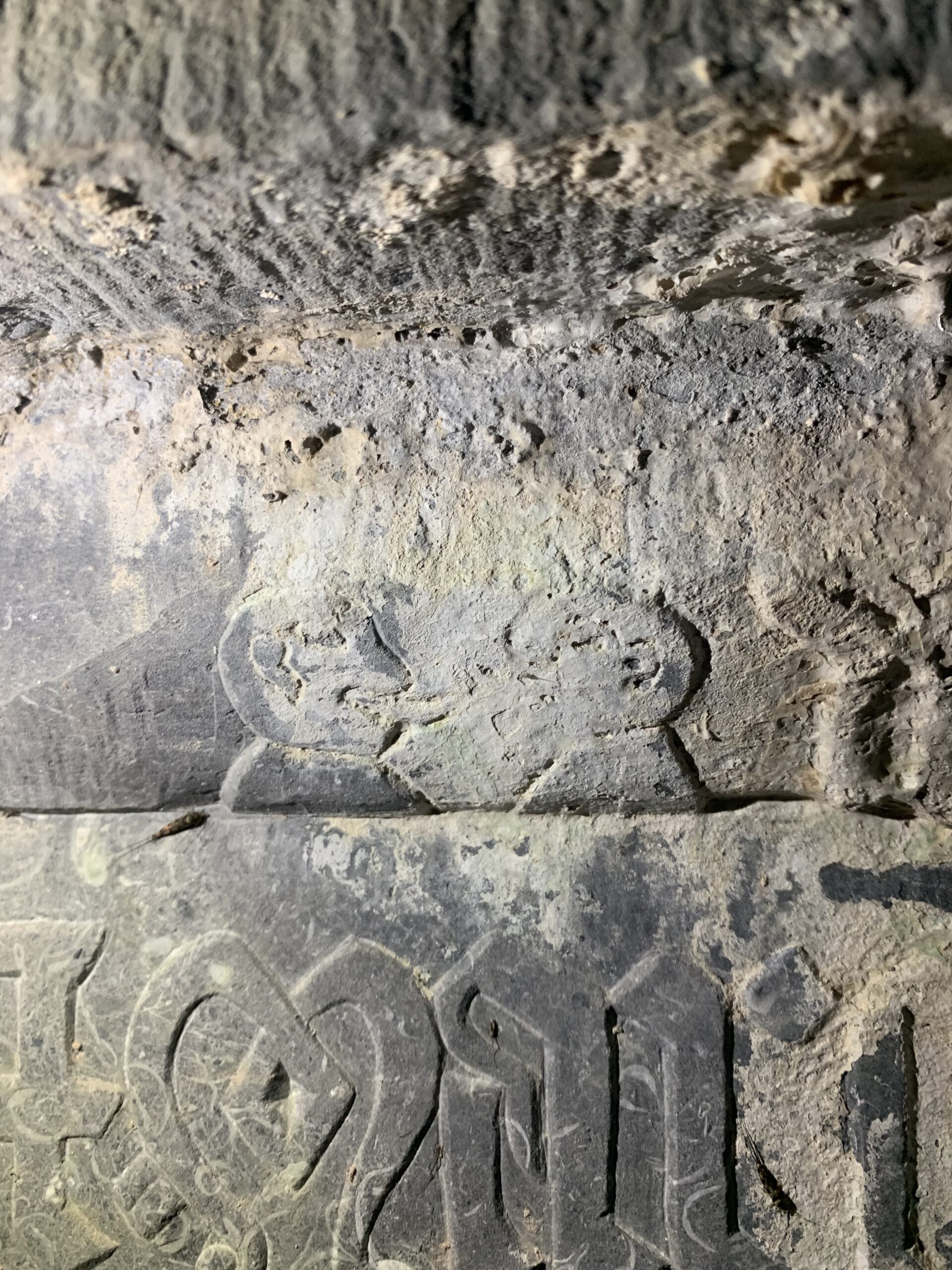
The detail here shows the carving of two bald men sticking their tongues out at one another. This is part of a larger memorial carving within the Bryan Vault and is a comment made by the stonemason. It could indicate that the person who commissioned this stone never paid the stonemason in full, or otherwise irritated the artist into leaving this mark which shows just what he thought of the person who is being commemorated.
Faith, Hope, and Grace
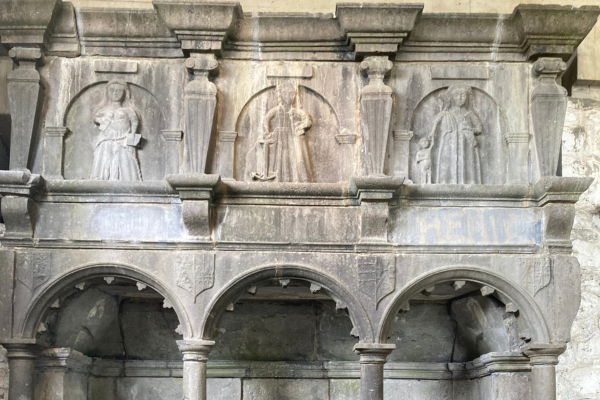
The tomb of Sir Richard Shee has a staggering number of intricate carvings, showing the wealth and status of a man who was as influential as he was controversial. Women were rarely depicted on Renaissance tombs, with the exception of carvings of family members, and so the trio at the top of the Shee monument are special not just because of the beauty of their detail.
They represent the virtues of Faith, Hope & Grace and show Sir Richard and the Shee family as exemplifying these virtues in life and death. Each one has symbols depicted beside her which represent the virtue and how it is connected to the family.